According to a recent article in the New York Times, a committee of the Spanish parliament last month voted to extend “limited rights to our closest biological relatives, the great apes — chimpanzees, bonobos, gorillas and orangutans,” in accordance with the precepts of the Great Ape Project. The proposal would make it illegal in Spain “to kill apes except in self-defense. Torture, including in medical experiments, and arbitrary imprisonment, including for circuses or films, would be forbidden.”
About Me
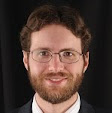
- Nathaniel M. Campbell
- I am a medievalist, a social studies teacher at Knox Central High School, and an adjunct instructor in history at Union Commonwealth University. My research includes medieval theologies of history, text/image relationships in visionary and mystical texts, and the writings of the twelfth-century Doctor of the Church, St. Hildegard of Bingen. I am also a translator of medieval Latin and German texts, especially as relate to my research. My translation of Hildegard's Book of Divine Works is available from Catholic University of America Press here. I completed a Master's in Medieval Studies at the University of Notre Dame in 2010, a Fulbright Fellowship in Germany in 2008, and a B.A. in Classics and German at Boston College in 2007.
Showing posts with label Philosophy of the Human. Show all posts
Showing posts with label Philosophy of the Human. Show all posts
Monday, July 14, 2008


Wednesday, May 28, 2008
The Abbey of St. Hildegard
 Since North Rhine/Westphalia is a Catholic part of
 Two years ago, on Shrove Tuesday and Ash Wednesday of 2006, I had the opportunity the first time to visit the Abbey, though, because of the impromptu nature of that first visit, I was forced to stay in a hostel in Mainz and commute each day. This time, I thought to plan far enough in advance to secure several days in the guest quarters of the Abbey.
Thus, I boarded a train that Tuesday morning, and though it would have been faster to take an express train to Frankfurt and then connect down the river, I chose a more scenic route that took me first to  The last time I visited, it was the cold of winter, the vines lying bare under a soft dusting of snow; now, their green foliage was bright and young, the first buds of the grape flowers just starting to open. Though the weather that afternoon was perfect, the burden of my pack as I trod the paths through the vines left me sufficiently drenched in sweat upon arrival at the Abbey’s gates to require a bit of a break before actually ringing the bell at the gatehouse.
 Though standing in the tradition of the abbey founded by St. Hildegard herself in the 1140’s, the modern estate is not, in fact, the same foundation. The community of women at whose head Hildegard found herself in the 1140’s had grown up around St. Jutta of Sponheim, an anchoress at the Disibodenberg (Mount St. Disibod), a men’s foundation a little to the south of Bingen, up the river Nahe. Finally, having outgrown their quarters and on the instructions of the voice of the “Living Light” that guided Hildegard throughout her life, she moved to separate her community from the monks and found a new house in the town of Bingen, on the southern bank of the Rhine, about fifteen miles downstream from the Disibodenberg. Though at first opposed by several fronts, Hildegard eventually prevailed, and by ca. 1150, she and her nuns were established at the Rupertsberg (Mount St. Rupert). Yet, the community continued to grow, and eventually, she was forced to establish a daughter house across the river in Eibingen. The main house of the Rupertsberg was, alas, destroyed in the Thirty Years’ War, and the Eibingen house heavily damaged, and what that war did not destroy, the Napoleonic secularization confiscated. Yet, the spirit of Hildegard’s work was not to be deterred: at the turn of the 20th century, a group of nuns founded a new house in Eibingen, a few hundred meters up the slope from the foundations of the old daughter house; and thus, an Abbey of St. Hildegard has grown up to carry on the traditions of the “Sibyl of the Rhine”, more than eight hundred years after her death.
 After checking in at the Gatehouse, I was given a set of keys and lead around to the guest dormitories; unlike some abbeys and cloisters that are completely open to visitors, much of the Abbey of St. Hildegard, being the private areas of the cloistered nuns, are closed off to the public, seen by none not in habit. After bidding the sister who showed me to my room farewell, I contentedly removed and unpacked my bag, and took stock of my quarters. While the decoration might be considered spartan or even severe by those used to finer accommodations, I found the simplicity of the room appealing. The bed, being not too comfortable, was nevertheless sufficient; the bathroom, while small, yet needn’t have been any larger; the desk, on the other hand, was large and the lighting good; and best of all, the rocker was most perfectly suited to the reading that I had planned.
Yet, though I had brought a certain stack of books (mostly on Hildegard) to wile away the time, I had not come to the Abbey with any intention of imprinting my own schedule upon the time. Rather, I was seeking to envelop myself in a rhythm not of my own fashioning but rather that of the life of the nuns—the rhythm of ora et labora, “pray and work”, as embodied in that rule laid down some fifteen centuries ago by the hand of St. Benedict. I was leaving the world, as it were, even if only for a few days, leaving behind the hustle and bustle of everyday life (perhaps best exemplified by that nexus that seems to rule so many of our lives today: the personal computer), and embracing that lifestyle of simple service to God.
Yet, despite the fact that it is a lifestyle of καιρός and not χρόνος, it is a life that is nevertheless regimented—but the beats of that regimen are the very essence of that special rhythm, for the Benedictine life is structured around the services of psalm-singing, readings, and prayers that make up the Divine Office or Liturgy of the Hours. During the regular days of the week (for on Sundays and high feasts they follow a more elaborate liturgical schedule), the nuns arise at half past five each morning to sing Matins; although it was an option, and each of the mornings the bells calling them to the church at the appointed hour did rouse me, I nevertheless, weak as I am, chose to go back to sleep for another hour. Thus, the beginning of my days at the Abbey was marked by the call to Lauds at 7:30, followed directly by the Holy Mass. Only after breaking our fast properly by supping of the Body of Christ did the guests gather in the guest refectory for breakfast. The next point around which the day was structured was the mid-day prayer at noon, for which the nuns that week had chosen to sing the office of Nones; lunch followed. The bells would toll again to call us to Vespers at 5:30 in the afternoon, directly after which we would take our dinner. Finally, at 7:20, we would gather once again in the church for the singing of Compline, followed directly by the singing of Vigils.
Furthermore, I should note that the nuns of this particular Abbey sing each of the hours, with their appointed psalms, in the same way that Hildegard’s companions did eight centuries before them—in the same language (Latin), and to the same chant. This was the rhythm of my days at the Abbey, and it was one that I was sorry to leave that Friday.
I finally had the chance to meet some of the other guests at dinner that night; over the simple fair of bread and butter, with some meats and cheeses and a pasta salad, we made each other’s acquaintance, chatting away in German about what it was that brought us to the Abbey. There was the woman seven months’ pregnant, taking a few days at the Abbey to recollect herself; the Protestant school teacher in her early thirties who had nevertheless maintained the practice since her university days of visiting the Abbey on vacations a few times each year; the petite Italian-German Catholic in her fifties who was an amateur expert in Hildegard’s herbal and natural medicines; the recently retired professor of music from Munich who had for years now served as a tutor for the nuns in their Gregorian chant; and then there was the slim, silent woman with red hair and glasses sitting at the end of the table. As we all settled back down with bowls of pudding at dessert, she finally piped up.
“I’m very sorry,” came her lilting Scottish voice, “and I don’t mean to be rude, but I can’t speak any German.”
“Not a problem; we’ll speak English for a bit, then,” I replied. A look of great relief spread across Joan’s face to discover a fellow English speak in the lot. Yet, not to be left out, several of the others joined in according to their various abilities.
After clearing our dishes to the wash cart and making our way out of the refectory back into the courtyard of the Abbey church, Joan and I were joined by Tina, the German school teacher, whose English was, in fact, as good or better than my German (she had lived in an international dorm during her days at the University of Heidelberg, where English was often the language held most in common by the many nationalities). Our trio quickly became routine, forming a company in which to share the experiences of the next few days.
Thus ran our days, structured around the anchor-points of the bells that summoned us to each of the hours, our threads woven sometimes singly, sometimes together,  into the tapestry of both individual and common experience. In the mornings after breakfast would be a nice, long walk, on Wednesday alone and on Thursday with Joan and Tina, up and around the top of the valley ridge, through the vineyards and the pastures, the fields of rape and the sheep paddocks. Here, Joan and I pose beneath a wonderfully-shaped tree that reminded us strongly of an ent. Afterwards, I’d find a spot on a bench in the courtyard of the church, passing the time with the pages of one of my books.
After lunch, I’d escape from the bright mid-day sun for a few hours in the rocker in my room, my books again before my eyes (though sometimes, a bit of a nap would accompany them). Later in the afternoon, our trio would come together again for a bit of an excursion from our hill-top refuge; on Wednesday, it was a visit to the parish
 Our Thursday afternoon excursion was a bit more expansive: passing through the town, we came to the banks of the Rhine itself and clambered aboard one of the boats that cruise up and down this famous stretch of the river between
 Our boat’s particular charge was to travel about two hours round trip downstream and back up, highlighting some of the inspiring, oft-romantic castles that are scattered high above the banks on this most scenic section of the majestic flood. Some of them, like the Castle Ehrenfels, were true medieval fortifications that lie today in ruins, victims of later, more brutal methods of war (built in the 12th century, the Ehrenfels was destroyed in the seventeenth).
  Others, though their first foundations might be medieval (like the 9th century nucleus of the Castle Reichenstein), were continually rebuilt and expanded, often taking their final forms in the 19th century as nobles, no longer in need of fortifications, nevertheless romantically took up the mantles of their medieval forebears. You may notice, for example, the neo-gothic chapel attached to the side of the Castle Reichenstein; the building continues to be used to this day—as a bed and breakfast.
The mixture of our company—Tina, Joan, and me—and our respective faith backgrounds added an additional layer to the complexity of our interactions. Tina, a Protestant, has nevertheless been coming to the Abbey for periods of vacation for years now and has developed close relationships with several of the nuns (as well as with the Italian cook who, alas, recently retired). And yet, although she attends each of the liturgies around which the Benedictine experience is structured, she noted her dissatisfaction with the Catholic form of the Mass; the focus in Protestant worship is on the reading and interpreting of Scripture, an activity she found lacking in the Catholic service, for ferial (week-day) Masses in Germany rarely contain a homily (though the priest will often offer a few introductory remarks at the opening of the service either illuminating the day’s readings or explaining the significance of the saint whose day it is). Joan, who was raised Protestant on the religious frontiers of Scotland—where the lines between Protestants and Catholics first begin to be drawn up, though with a cordialness foreign to the rougher relations found in Northern Ireland—no longer identifies with a particular Christian denomination and says that, if pressed to give it a name, her spirituality would align most closely with what one might call Taoism. Thus, the call to hospitality that is a hallmark of the Benedictine way of life allows for the extraordinary crossing of paths of many faiths; and while both the nuns and I certainly pray that God might work His grace for the conversion of the hearts of those who meet Him in the Abbey’s quiet confines, the focus for all of us is not the strict work of active evangelization but rather the via passiva of an encounter with other humans who, despite their various backgrounds, nevertheless sense the restlessness common to all humanity: et inquietum est cor nostrum donec requiescat in te (St. Augustine, Confessions 1.1.1).
Unfortunately, this quiet interlude—a restive pause for weary pilgrims—came all too soon to an end, and Friday came, a day of departures. Joan left shortly after breakfast to catch a train to
Finally, my attention turned to the bookshelves. I had been hoping that they might carry, in addition to the various translations into German, English, and Italian, the actual critical editions of the Latin texts of Hildegard’s works, published over the course of the last two decades in various volumes of the Corpus Christianorum Continuatio Mediaevalis, a many-volumed series, published by Turnhout in Brepols, that is making its way through all of the important works of the Latin Middle Ages—a feat last attempted by the indefatigable Abbé Migne in the 19th century, whose Patrologia Latina, though comprised of often lackluster and even erroneous editions, is still all too often our best (or even only) collection of so many medieval texts. I was hoping to add the CCCM editions, so well-known in their orange cloth bindings, to my collection of books, though knowing full well that they come not cheap—indeed, no normal bookshop, nor any of the various Amazon websites, carry them; the only recourse is often to antiquarian websites where prices quickly exit any reasonable range for my pocketbook. Alas, however, the bookstore did not keep them in stock (however expensive they might have been, I was hoping to find them at least conveniently collected in one place). I therefore contented myself to spend a still-significant amount of money filling my bag with various other books of Hildegardiana in both English and German, acquisitions that I know will very quickly justify their expense in the course of my studies.
As much as I was clinging to my time at the Abbey, however, those last remaining hours soon slipped away, and I found myself bidding farewell to the remaining guests at lunch and, after a few more fleeting moments caught on a bench under the eves of the gatehouse, I hoisted my pack upon my shoulders, with a large bag of my recent acquisitions in my hand, and made my way slowly down the mountain. I stopped in for one last look at the parish church of Eibingen, to make my farewells to Hildegard’s bones (as I had done before my departure two years previously), and to light a few candles for my special intentions. Though many of my prayers from two years ago had been answered and the requested guidance given, I had both some left to reiterate (the same petitions that, I imagine, I shall offer, in one form or other, until the day I die), and others to set anew before God, through the special intercession of His saints.
As I sat gazing out of the train window as the Rhine river zipped by on the way back to Koblenz, I fell again into a contemplative mood, searching with those inner eyes and ears that Hildegard so often mentions for one of those keys to unlock the experiences of the past few days; or rather, as is so often the task of the scholar, to find that one thread that runs through the whole tapestry, tying the disparate parts of random experience into a whole, meaningful picture. What, in hindsight, could I discern of the underlying meaning and structure of my visit? Just as the chanting of the canonical hours was the framework upon which was built the course of each day in that religious life, so also I was looking for the essence of that skeleton that made sense out of the ephemeral flashes of momentary experience.
I will not pretend that I had any great insights on that train, or at least, none greater than the standard connections we make as we survey each day of our lives, that is, in our quotidian mental activity of making what sense we can of it all. My conclusions were, therefore, often no more than simply the rehashing either of threads that I have already enumerated in this post, or of the threads that, more constantly and consistently, accompany me on my daily journey, the why’s and whither’s and what for’s that make up the bulk of human discernment.
There was one rather more special insight, however, that I would like to share. In encountering the other guests at the Abbey, each of whom had their own special reason and relationship with Hildegard, I was reminded once more not only of the manifold aspects of her life and work, but also of the great impact that each of those roles has on those of us today who encounter the “Sibyl of the Rhine”. Over the course of the months, I had begun, I realized, to succumb to that danger that lurks in the path of any academic: the danger of becoming too ensconced in our Ivory Towers, reducing, as it were, the true complexity of the figures we study to the merely academic and scholarly. My approach to Hildegard is (1) scholarly and (2) specifically theological, eschatological, and apocalyptic; and even when I step back from my specialty to survey the other fields of Hildegardiana—the music, the natural medicine, the theology not specifically eschatological—I nevertheless remain in that first mode of viewing, namely, the scholarly.
Yet, as I was reminded in those few days at the Abbey, Hildegard is to many much more than merely a topic of academic interest. I can look specifically to the Italian-German Catholic woman, whom we “scholars” would term an “amateur”, that is, whose interest in Hildegard is entirely practical. She studies Hildegard, spends time at Hildegard’s abbey, and reads Hildegard’s works, not because that’s her job, but because she finds meaning for her own life in Hildegard’s. Hildegard’s writings on natural medicine are not merely important as documents in the history of science; for her, they become actual tools in regulating the ailments of her own body. Likewise, Hildegard’s theology is not merely a collection of theoretical notions; rather, this woman has actually allowed her own spiritual life to be taught by Hildegard’s teachings. My time at the Abbey served as a great reminder to me that the vitality of Hildegard’s personality in our age is the product not of our scholarly researches but of actual people and their real encounters with an extraordinary woman of an age gone by. It is thus for us, the academics, not merely to write our books and give our lectures for the sake of other academics, but to realize that our profession, like all human activities, is meant to be for the advancement of humanity—and that such advancement is not merely an abstract goal of progress, but the concrete reality of people who live their lives in the here and now, perhaps weighed down by the weariness of day-to-day drudgery, yet also lifted up by the simple joys of day-to-day life, well-lived. Though we may use the language of us-versus-them, it is for us to recognize that, if we build the Ivory Tower and shut the world out, we but stifle and extinguish the vitality of our work. Let us, therefore, take as our example the Benedictine model: though we have our cloistered profession in which we trade in a commodity seemingly far removed from the lives of those outside the academic community, we must yet be open and, indeed, actively inviting to them; our principle should not be to close ourselves up, but to lay open the doors and take in our guests, providing them, in our own peculiar way, with refreshment in their lives—for it is the outsiders to our community who, in fact, provide our community with its own greatest rejuvenation.
Sunday, March 09, 2008
Pro-Life Prayer in Münster
 Yesterday afternoon, I participated in a Gebetszug or prayer procession here in Münster called “1000 Crosses for Life”. Organized by Euro Pro Life (European Voice of the Unborn Children: “Protect our Life”), it was one in a series of prayer marches that have been held by the organization throughout
  The mustering of the march began in front of the Aegidiikirche at around half past three, and by shortly before four o’clock, we were formed in three single-file columns, each with a cross on our shoulders and led by an icon of Our Lady of Guadalupe (afterwards, the head of the march explained that, although the event was ecumenical, this icon was chosen because it represents the pregnant Mary praying to her Son—thus making her the ideal protectress of the unborn). We were instructed not to engage in conversation with passersby (though there were certain young people whose task it was to hand out explanatory leaflets), for this was primarily a time for prayer.
We set out singing the hymn “O komm herab, du Heiliger Geist” (“O come upon us, Thou Holy Ghost”), aided by the excellent male and female voices that were broadcast over a series of loudspeakers distributed throughout the train. After this hymn, we recited the “Way of the Blood of Christ”; this devotion involves seven stations (1: The Lord shed His Blood at His Circumcision; 2: The Lord shed His Blood in Prayer on the Mount of Olives; 3: The Lord shed His Blood at the Scourging at the Pillar; 4: The Lord shed His Blood at the Crowning of Thorns; 5: The Lord shed His Blood on the Way of the Cross; 6: The Lord shed His Blood at His Crucifixion; 7: The Lord shed His Blood and Water when His Side was Pierced), each of which begins with a passage from scripture and a meditation. The first six stations are followed by the recitation five times of the Lord’s Prayer, while the last station has four “Our Fathers”: the 34 total “Our Fathers” represent the thirty-three years of Christ’s life and the one year of His unborn life in Mary’s womb. Finally, each station was closed by the “Glory be”, sung in German to the tune of “Amazing Grace”.  As we finished this devotion, we arrived in front of the Lambertikirche, where we halted (above photo). A meditation on the work of Blessed Clemens August Kardinal von Galen was read over the loudspeakers; Bl. Clemens August was the Bishop of Münster from 1933 until his death in 1946, and was beatified under Pope John Paul II. His motto, Nec laudibus nec timore (“Neither because of praises nor because of fear”), exemplified his stand against the oppression of the Nazis in his own time, and has become a watchword for the stand against the injustice of abortion today.
 As we continued from the Lambertikirche, we sang two antiphons, Laudate omnes gentes, laudate Dominum (Psalm 117: “O praise the Lord, all ye nations”) and Misericordias Domini in aeterno cantabo (Psalm 89(88): “My song shall be always of the mercy of the Lord”); and we concluded with the Chaplet of Divine Mercy and a reprise of “O komm herab, du Heiliger Geist”. The entire procession took about two hours, winding its way throughout Münster and stopping up traffic at very points along the way. Most bystanders watched in respectful silence; some even joined us in reciting the Lord’s Prayer. A few teenagers and twenty-somethings either laughed at us or yelled at us about individual rights (the latter charge came from a group of punked-out homeless kids who routinely solicit money along the city’s streets).
 Perhaps the most moving part of the experience, for me at least, was the little old lady who walked beside me the whole way. Though she must be in her seventies, she carted that cross the entire two hours, shuffling along with the rest of us, and never yielding to the oft-repeated offers to lighten her load. If the stiffness and aches in my limbs that greeted me when I awoke this morning are any indication, she truly bore her cross for Christ and for the unborn children yesterday.
At the end of the procession, which returned to the Aegidiikirche, the head organizer gave a short speech describing the efforts the group have undertaken in the past year, and inviting us to join them in their upcoming prayer marches throughout
 The lead organizer was especially keen to describe the march in
The power of this pro-life movement, however, far surpasses the abortion debate. After the march in
 If this movement, founded upon the Christ’s love for all humanity, including the unborn, can bring relief to the deep-seated prejudices of old, what power has it not? Dare we to hope that in this movement, the Orangemen and the Catholics in
Thursday, March 06, 2008
On the Habit of Profligate Swearing
Practically all of us either know or have met someone who engages in the practice of profligate swearing. In their everyday speech, such people can hardly finish half a phrase, let alone a complete sentence, without throwing in the “f-bomb” or one of its many derivatives. It is a “colloquial” style that, though abhorred by many, is often excused as relatively harmless, or worse, as the birthright of a certain class of citizens (in similar fashion is claimed exclusively to black Americans the birthright of using the “n-word” in everyday speech, a use whose proliferation now often rivals that of the “f-word”). It has become such a nuisance that the town of South Pasadena, California, has declared this week to be “No Cussing Week”.
These habits are often claimed to be either a demonstration of modernity freeing itself from the shackles of old-fashioned prudery (by those who excuse it); or again, an example of just how far not only our morals but also our respect for the English language (“the language of Shakespeare and Milton and the Bible,” as Henry Higgins puts it) have fallen—this latter the claim of those who would see such profligacy of basest language banished. Yet, while reading yesterday John Bunyan’s Grace Abounding to the Chief of Sinners (his spiritual autobiography, published in 1666), I was struck by how modern one of his experiences seemed (paragraphs 26-28):
Now therefore I went on in sin with great greediness of mind, still grudging that I could not be so satisfied with it as I would: this did continue with me about a moneth, or more. But one day, as I was standing at a Neighbours Shop-window, and there cursing and swearing, and playing the Mad-man, after my wonted manner, there sate within the woman of the house, and heard me; who, though she was a very loose and ungodly Wretch, yet protested that I swore and cursed at the most fearful rate, that she was made to tremble to hear me; And told me further, That I was the ungodliest Fellow for swearing that ever she heard in all her life; and that I, by thus doing, was able to spoile all the Youth in a whole Town, if they came but in my company.
At this reproof I was silenced, and put to secret shame; and that too, as I thought, before the God of Heaven: wherefore, while I stood there, and hanging down my head, I wished with all my heart that I might be a little childe again, that my Father might learn me to speak without this wicked way of swearing: for, thought I, I am so accustomed to it, that it is but in vain for me to think of a reformation, for I thought it could never be.
But how it came to pass I know not, I did from this time forward so leave my swearing, that it was a great wonder to my self to observe it; and whereas before I knew not how to speak unless I put an Oath before, and another behind, to make my words have authority, now, I could, without it, speak better, and with more pleasantness then ever I could before: all this while I knew not Jesus Christ, neither did I leave my sports and play.
I am hardly the first person ever to note that one of the qualities of great literature is its ability to endure and remain pertinent to the lives of its readers, even so many centuries after its composition. John Bunyan’s Puritan mindsight might seem, at first glance, so wholly foreign to modernity as to render his writings practically useless to the modern reader; and yet, one stumbles upon a passage like this and is forced but to recall the words of that Preacher some few dozens of centuries ago: “There is no new thing under the sun.”
Thursday, February 21, 2008
Respecting Life in All Its Forms
In today’s issue of The Heights,
While Mr. Sege has offered an eloquent and thought-provoking analysis of the implications of the right to life, his logic is nevertheless flawed in indicting abortion clinics and the
The fact is that every one of the more than 1,000,000 children who were killed by abortion last year in the
The
When that loss of innocent life is, however, an unfortunate accident in the course of legitimate warfare, such moral culpability is not incurred, just as when someone dies in an auto accident that was truly an accident. We must also recognize that the enemy combatants we face in
Finally, while I am gladdened to see that Mr. Sege has recognized that
Friday, February 08, 2008
It's still a human fetus
In an insightful and provocative story in this weekend’s issue, the New York Times Magazine examines the possible existence and extent of a fetus’ ability to suffer pain while in the womb. While approaching the topic initially from the perspective of fetal surgery (a fascinating and amazing example of the advance of medical technology), the article acknowledges and later examines the impact of the ability of a fetus to feel pain on the issue of legalized abortion. While I commend the entire article to my readers, I want to focus on an anecdote offered early in the article:
Most invasive of all is open fetal surgery, in which a pregnant woman’s uterus is cut open and the fetus exposed. Ray Paschall, an anesthesiologist at Vanderbilt Medical Center in Nashville, remembers one of the first times he provided anesthesia to the mother and minimally to the fetus in an open fetal operation, more than 10 years ago. When the surgeon lowered his scalpel to the 25-week-old fetus, Paschall saw the tiny figure recoil in what looked to him like pain. A few months later, he watched another fetus, this one 23 weeks old, flinch at the touch of the instrument. That was enough for Paschall. In consultation with the hospital’s pediatric pain specialist, “I tremendously upped the dose of anesthetic to make sure that wouldn’t happen again,” he says. In the more than 200 operations he has assisted in since then, not a single fetus has drawn back from the knife. “I don’t care how primitive the reaction is, it’s still a human reaction,” Paschall says. “And I don’t believe it’s right. I don’t want them to feel pain.”Mr. Paschall is among several medical personnel quoted in the article (the most prominent being Kanwaljeet “Sunny” Anand, who has been a tireless advocate over the last three decades for infant and fetal pain management) who also support, at least in limited terms, a woman's right to have an abortion. Yet, what I find most provocative is Mr. Paschall's statement, “I don’t care how primitive the reaction is, it’s still a human reaction. And I don’t believe it’s right. I don’t want them to feel pain.” I would echo his words to say, no matter how primitive the fetus is, it’s still a human fetus. This brings me, however, to a point on the debate over abortion that I've been meaning to make for quite a long time (and I should make clear before we start that in the following argument, I appeal only to human reason and the natural law; my conclusions do not rely on any revealed truths peculiar to Christianity). As I've alluded to previously, this year’s election once again represents a showdown between those who would protect human life at all stages of development (represented by their presidential candidate, Sen. John McCain), and those who insist that the government not guarantee the right to life that was once so eloquently named “inalienable.” Supporters of candidates like Sen. Hillary Clinton will tout that she believes that abortion should be “safe, legal, and rare.” Yet, what they don't realize is the logical contradiction behind such a statement. If one believes that a human fetus is an innocent human life (N.B. the adjective innocent indicates that the fetus is guilty of nothing by which it would deserve punishment, an assumption that I hold to be self-evident), then the natural law that informs us that homicide is immoral also informs us that abortion is immoral. To put it into syllogistic form: (A1) It is immoral and legally punishable to purposely kill an innocent human life. (B1) A human fetus is an innocent human life. (C1) Therefore, abortion (the killing of a human fetus) is immoral and legally punishable. (N.B. I have included the adjective "innocent" in the major premise because, at least according to the natural law, there are certain situations where it is morally and legally permissible to kill a human life, e.g. in warfare. The revealed beliefs of religion may place additional restrictions on these situations, but as I have said, I am arguing here from the natural law.) The corollary to this syllogism is that if one believes that abortion should be legal, then one denies either one or both of the premises. Since I've yet to meet an abortion supporter who denies the major premise (indeed, many abortion supporters offer more comprehensive versions of the major premise than some pro-lifers do, i.e. they extend the immorality of killing to capital punishment and even to warfare), then it is clear that abortion supporters must deny the minor premise, namely, that a human fetus is an innocent human life. Furthermore, since I've also never met an abortion supporter who claims that a human fetus is a guilty human life, then it is also clear that abortion supporters deny that part of the minor premise that declares a fetus to be a human life. If, therefore, one believes that a fetus is not a human life, that is, if one believes that the fetus is simply an extension of the body of the mother, and that the mother therefore exercises the full sovereign rights over the fetus that she exercises over the rest of her body, then one's moral judgement on abortion is reduced to a judgement concerning those sovereign rights. The syllogism would then follow: (A2) Without extenuating circumstances, a human being exercises personal sovereignty over his or her body. (B2) A fetus is a part of a woman's body. (C2) Therefore, a woman exercises personal sovereignty over her fetus. If this is really what Sen. Hillary Clinton believes, then her position in favor of abortion is logical. What is not logical, however, is her claim that abortion should be "safe, legal, and rare." It is this last factor that leads her into trouble. She must have some reason for wanting abortion to be rare. Yet, as far her logical position is concerned, it shouldn't matter to her whether abortion is rare or not, just as it shouldn't matter to her whether a woman dyes her hair blond or black, or pierces her navel or her ears, or gets breast implants or breast reduction surgery. Each of these decisions are made out of the woman's sovereign rights over her body, and Sen. Clinton doesn't have anything to do with those decisions. Yet, Sen. Clinton does say that she wants abortions to be rare. In fact, one is unlikely to meet any abortion advocate who claims that they don't want abortion to be rare. And the reason for this is simple: as much as abortion advocates try to delude themselves into believing their syllogism, they do not, in fact, actually hold to it. Despite their attempts to ignore the prods of the natural law, they do, in fact, conceive, at least subconsciously, of a moral dimension to the decision to have an abortion. Where they in fact fail is in the first part of the major premise: Without extenuating circumstances. This caveat to the premise is necessary for its logical cohesion, because both individually and as a state we acknowledge that there are circumstances under which a human being does not exercice personal sovereignty over his or her body. For example, we place age restrictions on things like drinking and smoking and getting body piercings; we also admit that convicted criminals have abdicated, at least temporarily, certain of their rights, like the right of free movement; we even go so far as to refuse certain classes of the clinically and criminally insane of almost all their rights of personal sovereignty over their bodies. For the abortion syllogism to hold, there must, therefore, be no extenuating circumstances. Yet, it is evident that there are extenuating circumstances when a woman is pregnant. Whether you believe that a fetus is a human life or not, we all agree that, if carried to term, it will be a living, breathing, moving baby. Furthermore, the woman cannot produce the fetus by herself; the fetus is as much the product of its father as it is the mother's. Finally, especially given our modern ability with ultrasound technology to visualize the fetus, we all do feel, despite our views on abortion, that twang of amazement, wonder, and awe when the fetus we have fathered or mothered sucks its thumb or kicks its foot in the womb. The fact is, the natural law is squeezing its way into Sen. Clinton's views whether she likes it or not. What she doesn't realize is that in calling for abortion to be "rare", she admits that there are compelling reasons to discourage the practice. For these compelling reasons to exist, the logical syllogism that allows abortion to go unopposed falls apart. Sen. Clinton's own humanity undermines her support of abortion. Although abortion advocates will tell you that there is a grey area, they are simply trying a trick of sophistry in order to have their cake and eat it too. The choice is simple: either abortion has absolutely no moral consequences and should be perfectly legal; or abortion does have moral consequences, and the first syllogism that we proposed is the proper one. As we have shone the former conclusion to be false, there remains but one logically consistent, proper conclusion: (C1) Abortion (the killing of a human fetus) is immoral and legally punishable.
Sunday, January 13, 2008
Rome: Rediscovering a Personal Humanity
Day 1: Friday, January 4
At 2:00 a.m. last Friday morning, I boarded a train from Münster to Düsseldorf in the first leg of a long, early-morning journey. While catching snippets of sleep on trains, in an airport and on an airplane, I finally returned mid-morning to the sunshine and blue skies of the urbs aeterna, Rome—just one more in the great sea across time and space of pilgrims coming to this ancient city.
Yet, from the start, it was a journey filled with propitious occurrences whose import I only later would piece together. After disembarking from the plane at Rome’s Fiumcino airport, I struck up a conversation with another American who was on the plane with me while we were walking out to catch the train into the city, and in the course of our banter, it was revealed that he was the professor-in-charge at the Intercollegiate Center for Classical Studies (known as the Centro) in 2001-2002, the same small center on the Janiculum hill where I spent the Fall Semester of my Junior Year (2005). Though he now serves as Director of the Institute for Advanced Technology in the Humanities at the
After taking the train from the airport to Termini, the main train station of Rome, I made my way on foot to the Sunshine Hostel by the Porta Maggiore in the south of the city; when Pete Heinlein and I visited Rome over Pentecost two years ago, we stayed at the same hostel, and since it was inexpensive and I was familiar with it, I decided to go with it again. Whereas my last visit occurred at the end of May during the beginnings of the busy tourist summer season, it turns out that the beginning of January is the slowest time of the year for tourism in
After unloading my great backpack and washing my face and brushing my teeth, I set out into the city. Lindsay Wilcox and Peter Stamm, friends of mine who are currently seniors at Boston College and whose pilgrimage these first two weeks of January to Assisi and Rome provided the impetus for my own journey, were not to return from Assisi until Saturday evening, so I had two full days on my own to fill—but in Rome, that is a very easy thing to do. First, I headed up to the Basilica of Santa Maria Maggiore (St. Mary Major), one of the four great basilicas of
While kneeling for a moment in prayer before the reliquary, the entrance music for the 11:00 Mass in the Pauline Chapel began—Schubert’s Wiegenlied, played for the infant Jesus during Christmastide. Since I had no concrete plans (an excellent way, I discovered, to spend time in
After Mass, I made my way down the Forum Romanum to sit and eat the sandwich I had packed for lunch—hearkening back to my last day in
I decided to make for my old stomping grounds on the Gianicolo, and found myself an hour later in the Basilica of S. Pancrazio, a beautiful but oft-neglected church by the Centro where I had often said the rosary while living there. I stumbled in during Holy Hour, so I settled in to say again a rosary in those familiar confines. By the time the Benediction was given and I returned to the streets, darkness had fallen, and I cut a leisurely path over to the great statue of Giuseppe Garibaldi and the breath-taking views from its terrace across the whole of the city.
 The reminiscences of times past continued as my stomach started to growl and I made my way to the Rosticceria-Pizzeria in the Piazza Rosolino Pilo that was well-known among the Centristi for its kebaps, and I made sure to get a picture of one of the owners, just to show my friends that the kebap place is still alive and well. After the kebap (which was just as good as I remembered it), the long hours and short sleep of the night before finally began to catch up with me, and I headed back to the hostel to get a good night’s sleep.
Day 2: Saturday, January 5
Saturday morning dawned grey and wet, weather which was to stay with us for several more days. After a cappuccino and chocolate-filled croissant at my favorite café near the basilica, I entered S. Maria Maggiore to find a place to say the rosary before the eleven o’clock Mass. I stumbled, as it seemed that I so often did, upon one about to start in the adoration chapel, and so I settled in the recite the Joyful Mysteries with the little old Italian ladies. It was over the course of the next hour (for the Italians, in fine Italian form, manage to stretch five decades over a whole hour through lengthy meditations and frequent opportunities for song) that I made my first reflection on the intensely personal connections at the center of the Catholic faith, despite the global scale of a Church of more than a billion people. As I mentioned in my Christmas message, the Incarnation of Our Lord is an incredibly astounding mystery because of its personal, historical nature. Jesus Christ is an actual person, and we as Christians can have actual, personal relationships with Him. Yet, the Christian religion is not just about the personal relationship between me and Him, but it also about the personal relationship between me and you. Another consequence of the Word-Made-Flesh is that the great society of humanity is connected not just as a giant organism, a statistical unity, but also at the fundamentally personal level of one human being connected concretely to another in a relationship of mutual, Christian love. The Personhood of Christ gives the deepest and richest meaning to the personhood of every human being. It occurred to me that I have often focused so much on my personal relationship with God that I have neglected to remember that I am also in a personal relationship with other Christians. The Italians in that chapel with me were not strangers, nor was I simply the odd man out. Far more important than the fact that I couldn’t understand what the priest was saying when he was meditating upon the Nativity was the fact that, because of the Nativity, I was connected through Christ in a very real and concrete way with each and every one of the fellow Christians who were praying with me that day. To remember this personal connection and to make it a focus of my remaining time in
The Markets and Forum of Trajan
After Mass and lunch at a pizzeria near the Piazza Venezia, I decided to spend the afternoon at the newly-opened museum in the Markets and Forum of Trajan (a museum that didn’t exist when I was last in  The exhibits contain various pieces of statuary and architectural elements from the imperial fora, much of it unearthed in excavations in just the last decade. For example, this is a section from the frieze and architrave from the Temple of Venus Genetrix, which is the temple that Julius Caesar erected in his forum to Venus, the originator of his line (he claimed descent from Iulus, the son of Aeneas, the son of Venus and Anchises). The focus is on the For a of Trajan, Augustus, and Caesar, and the graphic displays do an excellent job of tracing the stages of the fora, from original construction to the Middle Ages and through the modern excavations, including an exhibit on the rooms’ use at one time by the nuns of St. Catherine’s Monastery. Besides the exhibitions, one the most exciting features of the museum is the chance to walk all throughout the multiple levels of the great hemicycle that backstops the Forum of Trajan, as well as on the actual floor of the forum itself.
Unfortunately, the museum has extensively pursued a policy of displaying modern sculptural “art” in the midst of the ancient monuments— a practice which not only distracts the viewer from the antiquities he has come to enjoy, but utterly discredits the “artistic” concept of the modern works by placing them in direct comparison with the beauty and splendor achieved by the Romans almost two millennia ago. These modern sculptors have chosen the most spectacularly inappropriate venue to display (and augment?) the abysmally dim value of their attempts at “art”; but I suppose their egos are stroked to fancy themselves worthy to be displayed among the ancient masterworks—though in this arena, no amount of wishing can make the silk purse of the sow’s ear.
The rain continued unabated throughout the afternoon, so I simply wiled away the hours wandering the cavernous halls of the markets until it was time to return to Santa Maria Maggiore to meet Lindsay and Peter. They had not had the chance that day to attend Mass yet, and were hoping to make it to a small church nestled in a back alley near the Ponte Cavour (in the neighborhood of the Mausoleum of Augustus and the Ara Pacis) that is affiliated with a group that both of them work with back in the states and which offers a Tridentine Rite Mass under the terms of the Pope’s motu proprio each evening at 6:30 p.m. Unfortunately, several wrong turns on the way over there left us hopelessly lost and too late, so we resolved instead to find a cozy restaurant near the Piazza Navonna to enjoy dinner and catch up. After dinner, we wandered over to the Pantheon and some good gelato, and then slowly made our way back up to the neighborhood around Termini, where they were staying Saturday and Sunday night.
Day 3: Sunday, January 6: The Feast of the Epiphany
 We made an early start Sunday morning, for we hoped to attend the Papal Mass for the Feast of the Epiphany in St. Peter’s Basilica—the Mass started at 10:00 a.m., so we needed to arrive about eight o’clock to hope for anything nearing a good seat. Fortunately, it being the slow season for Roman tourism, the crowd gathered more slowly than we had expected, and we snatched excellent seats more than halfway up the length of the nave and less than a dozen chairs from the central aisle. Despite the continued cloud cover and rain outside, the Basilica was brilliantly lit by the great banks of lights installed along the ceiling, allowing our eyes to feast upon the endless detail of the hulking structure. Shortly before 10 o’clock, the Sistine Chapel Choir started the entrance hymn for the seating of the great number of prelates attending the Mass, and we sang Flos de radice Iesse, the Latin original of the well-beloved English hymn I Know a Rose Tree Springing. Then, at precisely 10 o’clock, the Pope arrived at the great doors of the Basilica and made his way down the central aisle as the choir sang his entrance antiphon: Tu es Petrus, et super hanc petram aedificabo Ecclesiam meam, the same words that ring the lower part of the great dome’s drum.
  The Mass was said in Latin, though of the Novus Ordo and not the Tridentine Rite, and was on the whole a more subdued affair (though with richer music) than the great outdoor papal Mass that I attended nearly two years ago in St. Peter’s Square for the Pentecost. After the pontifical blessing at the end of the Mass, the whole of the congregation pressed toward the barriers at the central aisle as Pope Benedict processed out, and I was able to capture this clear photograph of him as he passed us by.
We had hoped to stay in the Basilica after Mass to look around, but we were ushered out (probably so that they could clean up the chairs), so instead we joined the masses gathered outside in St. Peter’s Square for the Pope’s noon-time Angelus message and blessing—he must have been rather rushed to exist the Basilica, change, and hurry back to his rooms in the Apostolic Palace in time to give the Angelus. After his blessing, Italian police and firemen formed a cordon through the crowd, and through the space they opened up came processing the Three Kings bearing their gifts of Gold, Frankincense, and Myrrh to be placed in the life-size Nativity in St. Peter’s Square at the base of the obelisk—this picture of the Nativity was taken later, but gives you a good idea of how impressive it is.
As the crowd began to break up, the hunger that the excitement of the whole experience had kept at bay now crept up on us with full force, and we stalked the streets to the northeast of the Vatican until we found a nice (reasonably priced) restaurant to grab some lunch. This would be a good time to note that throughout our visit, lunches and dinners were almost always leisurely affairs, owing to our generally chatty nature, the often tiring nature of our activities, as well as the generally relaxed pace that both Lindsay and Peter were pursuing—more on this a little later. After lunch, we set off on a meandering journey into the heart of the city, our only general goal being the Capitoline Hill, though with many pit-stops in between, including a long and quiet break sitting in a park near the  Largo Argentine when we realized just how draining the experience of a papal Mass can really be. As evening came on, I led them on a tour of the imperial fora, and, passing the Colosseum, we ascended the Esquiline Hill to visit the church of S. Pietro in Vincoli (St. Peter in Chains), which houses the relics of the chains the bound St. Peter in prison, as well as the tomb of Pope Julius II, adorned with Michaelangelo’s famous Moses. My fellow parishoners at St. Mary’s might also
  recognize the figures used in this church’s Nativity scene, set before the reliquary holding St. Peter’s chains. Descending the
Day 4: Monday, January 7
We met again Monday mid-morning in the Piazza Santa Maria Maggiore, Lindsay and Peter with their bags in tow, for they had checked out of their first hostel and were to move that afternoon to a B&B near the Vatican (on the other side of the city) that afternoon. Although I had conceived of several possible programs of sightseeing tours through the city, since I was simply along for ride and to offer my experience in
After lunch at a pizzeria near St. John Lateran (the cathedral church of Rome, that is, the official seat of the Pope as Bishop of Rome—the right to say Mass at the high altar is reserved to him alone), we hopped on the Metro to cross to the other side of town so that Lindsay and Peter could check in to their new lodging. While they were getting situated, I settled down on the steps of Bernini’s colonnade in St. Peter’s Square (the rain having stopped in the night, the sun that day had dried them off) to people-watch, read a bit more of 
Shortly after six o’clock, we met again on the Ponte Cavour to attend the Tridentine Rite Mass at that small church we had tried to visit Saturday evening. This time, we did not get lost, and made it with plenty time to spare. This was, in fact, the first Tridentine Rite Mass that I had ever attended, despite my long work with the Latin language. I found it, however, neither strange nor difficult to follow, for the Tridentine Rite, especially in the Low Mass (as this was), is very, very near the Sarum Rite, from which the Anglican Rite used at St. Mary’s, my home parish in Denver, is directly taken. Hence, I was able to follow it very closely, for, other than some divergences in the prayers of the Canon of the Mass, it was an identical match to the Low Mass I have attended so many times at St. Mary’s. While Lindsay and Peter followed along in their Latin Missals, I simply followed along from memory, albeit in English rather than Latin. As the priest said most of the Mass sotto voce, and the congregation followed silently, with the server offering the responses on their behalf, there was no need for me to know the responses in Latin—though often enough, I did. Though I would not recommend the experience for everyone, I found it most contemplatively compelling, and the sight of a fiddleback chasuble and a maniple was one for sore eyes, indeed.
After Mass, we grabbed dinner at a pizzeria which Lindsay had found highly recommended in one of the guidebooks she brought, and it did not disappoint. After a jaunt around the Via del Corso to find some chocolate gelato and a brief visit to the Column of Marcus Aurelius (I wanted to show them the famous “Rain Miracle” during Marcus’ campaigns in Austria, which Dio Cassius says was popularly attributed to the intervention of “Christians”), we parted ways at the Metro stop at the Spanish Steps.
Day 5: Tuesday, January 8
We met Tuesday morning again under bright blue skies in St. Peter’s Square near the Nativity, for Peter and Lindsay wanted this day to explore every square inch (no mean task) of St. Peter’s Basilica. The “off-season” for tourists proved a blessing again as the line to go through the metal detectors to enter the Basilica was practically nonexistent. We stopped first for a length of reflection and prayer in the Adoration Chapel, and then began to make our way slowly around the massive footprint of the church that was long the largest in all Christendom (I believe it was recently eclipsed by a new, massive missionary work somewhere in Africa), and in the course of our wandering, we stumbled along things that I had never seen before—the same phenomenon as the previous day manifesting itself, as I had never properly taken the time to investigate each and every of the side chapels and altars. This being the heart of Catholic Christendom, it was no wonder that around each corner lurked a new and delightful surprise—the bones of St. Gregory the Great here, the relics of St. John Chrysostom there (and a delightful inscription noting that not twenty years ago, Pope John Paul II had donated some of them back to the Orthodox Patriarch of Constantinople, Bartholomew I).
After the floor of the Basilica, we made our way down into the grottoes beneath to visit the tombs of various popes housed there, including that of John Paul II and the window into the confessio holding the bones of St. Peter. Finally, we made the intrepid journey up the more than 1,000 steps to take us to the observation deck along the top of the dome’s cupola—unfortunately, we had little breath left for the views from up there to take from us. Upon our descent, we discovered we were in need of a break, for our legs were a bit wobbly after the whole ordeal, so we found another nice pizzeria off the Via della Conciliazione for lunch. After lunch, we took to people-watching in St. Peter’s Square for a while, until 4:30, when we met Msgr. Anthony McDaid for some coffee. Msgr. McDade is a delightful Irishmen currently assigned to the Congregation for the Clergy in Rome; some years ago, he served with the Archdiocese of Denver, where he became good friends with Liz O'Malley, who also happens to be a good friend of my grandmother’s. When I left to study in
After coffee with Msgr. McDade, we met again for Mass at that little church tucked away by the Ponte Cavour, and I discovered that this second time offered me a different experience with the Tridentine Rite. The previous night, I had gotten caught up in recognizing each element of the Mass so familiar to me from the Anglican Rite; this time, I was able to focus more on the uniqueness and beauty of the Latin Rite on its own terms.
We returned to the area on the west side of the river near Lindsay and Peter’s B&B for dinner, where we found a wonderful restaurant that looked far more expensive than it really was—brocaded tablecloths and charger plates on the tables, yet still within the price range of three college students. We also had a wonderfully inquisitive waiter who was quite curious to hear about various aspects of our lives in
Day 6: Wednesday, January 9
I woke a little earlier on this, my last day in Rome, for I needed to pack everything back up and make sure I didn’t leave anything behind, for once I set out, I wouldn’t be returning to the hostel, or at least not during this trip to Rome. I met up with Peter and Lindsay once again in St. Peter’s Square, for this morning’s agenda was another thing which for me would be a new experience: attending the weekly General Audience of His Holiness Benedict XVI in the expansive Paul VI Auditorium situated to the south of St. Peter’s Basilica. It was again a sign of the “off-peak” season that the auditorium filled rather slowly and not, in fact, to capacity. The tickets for the audience, which are “entirely free”, as it says on them, we acquired the previous day when visiting the Basilica—after one passes through the metal detectors and before turning right to head up to the Basilica, one passes on the right the entrance to a large set of stairs and a great hallway leading back into the Apostolic Palace and guarded by Swiss Guards in their Technicolor garb; after gathering up the nerve and explaining your purpose to the police officers standing at the base of the stairs, one member of your group ascends and asks the Swiss Guard on the left for the tickets, which he will retrieve for you. A bit of a production, but completely worth it, as we discovered on Wednesday.
 While waiting for the audience to begin, we took in the cavernous hall, the Nativity and Christmas Tree set up on the right of the stage (the tree’s lighting changed every few minutes, cycling through blue, red, yellow, green, and purple), and enjoyed the boisterous music performed by what turned out to be a group of Italians in native dress with drums and mandolins and tambourines. At 10:30 sharp (while most Italians seem to shy away from starting anything on time, the Pope’s schedule runs like clockwork—he is German, after all), Pope Benedict entered the hall to thunderous applause, and after an opening prayer and reading, he offered his address. Though it was in Italian, I was able to follow the general gist of the twenty-minute lecture (I continually felt the urge to take notes—I suppose you can take the Pope out of the classroom, but you can’t take the classroom of this Pope, at any rate), and my suspicions were confirmed when he offered brief three to five minute recapitulations in French, English, German, Spanish, and Polish (though the last was read for him by a Polish bishop): he gave us a general overview of the life and writings of St. Augustine, promising to use the African bishop as the baseline for his addresses in the weeks to come.
  While he read the English version verbatim from the paper in front of him, he took several detours from the script when proffering the German version, including several lighter moments (“The metropolitan in Africa called Augustine back to the see at Hippo because he was in need of good preachers, since he himself wasn’t one”). Before he offered his remarks in each language, he was introduced by a bishop or priest in that language, who also introduced the registered groups of pilgrims from that particular language area in attendance at the audience; after the English-speaking pilgrims were introduced, a church choir from Massachusetts sang a setting of the Angelus, for which the Holy Father later thanked them. After concluding his remarks, Pope Benedict led the hall in the recitation in Latin of the Our Father (printed on the back of the tickets for those who didn’t know it Latin), and offered a blessing that he extended to the families of all in attendance, with special intention for the sick and ailing.
Afterwards, he greeted several guests on the stage, and then waded into the crowd to visit with some of the pilgrim groups; unfortunately, he didn’t make it much past the first few rows, and after about twenty minutes he exited stage right to more applause and chants of “Benedetto!”
We made our way back into the sun-drenched expanse of St. Peter’s square, and as I had only about a half-hour before I had to leave for the airport, we grabbed some panini sandwiches from a street vendor and enjoyed our last few minutes together. We made our goodbyes, I wished them all the best on the rest of their pilgrimage (they will be in
Subscribe to:
Posts (Atom)