About Me

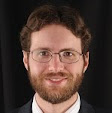
My photo
I am a medievalist, a social studies teacher at Knox Central High School, and an adjunct instructor in history at Union Commonwealth University. My research includes medieval theologies of history, text/image relationships in visionary and mystical texts, and the writings of the twelfth-century Doctor of the Church, St. Hildegard of Bingen. I am also a translator of medieval Latin and German texts, especially as relate to my research. My translation of Hildegard's Book of Divine Works is available from Catholic University of America Press here. I completed a Master's in Medieval Studies at the University of Notre Dame in 2010, a Fulbright Fellowship in Germany in 2008, and a B.A. in Classics and German at Boston College in 2007.
Showing posts with label History of Christianity. Show all posts

Friday, February 22, 2008

The General Plan

It recently occurred to me that readers of this blog, whatever they may think of it, might be rather in the dark as to what exactly I’m doing this year in Germany. In my infinite wisdom, I have failed to write a post on the subject, despite the fact that I am already half-way through the ten-month Fulbright period. So to paraphrase the inimitable Sam Seaborne, let’s forget about the fact that I’m coming a little late to the party and embrace the idea that I showed up at all. Some of you will already be familiar with my work, and I would advise you not to waste your time reading further; this post is intended for the general reader who has not experienced first hand the trials and tribulations of the process that is applying for a Fulbright Grant. Thus, here follows the text of my Fulbright Project Statement as written more than a year ago:

“The 20th century has seen a revival of interest in many little-known medieval authors, especially in previously overlooked female writers. The journey of these authors from their time through to ours can be fascinating, and a study of the reception of their works through time can reveal much about each successive age.

One of the first major female authors to enjoy a resurgence of interest and scholarship was Hildegard von Bingen, an abbess and writer of the 12th century. Herbalists have embraced her for her works on natural medicine and cures, while New Age spirituality has found expression in the soaring melodies of her chant. Feminist movements have come to regard her as a monument to the power of the feminine in an age of misogyny. I myself discovered Hildegard one afternoon the summer after my sophomore year in college, while, working under an Advanced Study Grant from Boston College, I set about an introductory study of Medieval Latin literature and paleography.

In her own time, Hildegard was also well known as a visionary and prophet. She became a figure of wide renown after her powers were certified by Pope Eugenius III and she published in 1151 the first volume, Scivias, of her massive visionary trilogy. She corresponded with popes, kings, and even with Emperor Friedrich Barbarossa. At the age of 60, remarkably for a woman of that time, she embarked on the first of four preaching journeys.

For the great stretch of history between her death in 1179 and her modern rediscovery, Hildegard continued to enjoy a wide reputation as a visionary whose apocalyptic writings have been held to prophesy a number of subsequent events: the rise of the mendicant orders and their battles with the papacy over apostolic poverty; the Protestant Reformation; the rise (and fall) of those firebrands of Europe, the Jesuits; and in every age generally, the coming of the Antichrist.

This reputation as primarily a visionary prophet owes much to the fact that for most of that time, Hildegard’s works were not known in the fullness of the originals, but through a redaction of her prophetic and apocalyptic writings executed in the 1220’s by the Cistercian prior Gebeno von Eberbach. In his Speculum futurorum temporum or Pentachronon Gebeno collected various prophetic excerpts from two of Hildegard’s three large visionary volumes, Scivias and Liber divinorum operum, and from her correspondence. In addition to collecting various prophecies, Gebeno provided a commentary on them and, more important, on Hildegard as a prophet of her age and of the times to come.

Gebeno’s own times were ones of religious and social upheaval in Europe. The previous decade had seen the rise of two great new religious orders, the Franciscans and the Dominicans; the Fourth Lateran Council, which was a watershed mark in the definition of the medieval church; and the papacy of Innocent III, whose attempts to expand the worldly authority of the Church brought him into deep conflict with the secular leanings of the Holy Roman Emperor, Friedrich II (whom many would identify with the Antichrist). The following decade would see the beginning of the reign of St. Louis IX in France and the continued fracture between the Church and the Empire. It was also a time of unrest among the peasants, who, after the experience in the previous century of the heretical Cathars and their violent repression by the Church, were soon to be faced by even more heretical movements and their even more violent repression by the nascent Inquisition; reports of the coming of the Antichrist and of the End Times were constant.

Under these circumstances Gebeno set about compiling Hildegard’s prophecies, and it is this compilation that I propose to study under a Fulbright Grant for the full academic year beginning October, 2007. While some scholars have investigated the impact of Gebeno’s work on the reception of Hildegard’s writing, few have approached him as an author in his own right. Why did Gebeno put together this “Mirror of Times to Come”? How did he gather the texts? How was he introduced to Hildegard’s writings, and where did he find his sources? How did Gebeno deal with her cumbersome style, which suffers from redundancies, awkward constructions, and strange neologisms (as he himself noted, “Most people disdain and abhor the books of St. Hildegard, because she spoke obscurely and in an unfamiliar style”)? How did the people and events of his time affect his writing? What do we learn in the Pentachronon about Gebeno as a thinker, a believer, and a writer of Latin? In short, how did the Pentachronon take shape and develop, both in itself and as a product of an abbot writing in the 1220’s?

One leading scholar who has taken a serious look at some of these issues is Prof. Christel Meier-Staubach, the director of the Seminar für Lateinische Philologie des Mittelalters und der Neuzeit at the Westfälische Wilhelms-Universität Münster. Prof. Meier-Staubach has done extensive work on Hildegard, including an examination of Gebeno’s writings. If I were awarded a Fulbright Grant, I would study with her and her colleagues, not only researching the development of Gebeno’s book, but also enrolling in a variety of courses offered by the Seminar in a broader study of Medieval Latin literature and philology; Prof. Meier-Staubach has kindly offered to support me in my work. Because the Latin language was fundamental in defining mediæval European culture, I hope to come to a better understanding and appreciation of that culture through a study of its language and literature. By the end of the Fulbright year I intend to produce a paper on the development of Gebeno’s thought and writings which can serve as the foundation for a doctoral thesis as I pursue graduate studies on my return to the United States.

Some might be tempted to pose the question: why is the study of an obscure, 800 year-old collection of apocalyptic writings important to our modern world? Gebeno wrote in a time of great conflict between the Holy Roman Empire and the Church. The excommunications of Emperor Friedrich II in 1238 and of Friedrich Barbarossa the century before have long been wounds to the German cultural pride: Barbarossa is, after all, a great German hero. It was no accident that the Reformation occurred not in France or Italy but in Germany: the Germans have long had an uneasy relationship with the power and authority of the papacy, and this tension survives even today. An American might laugh at a headline that appeared after the election of Benedict XVI in 2005: “Wir sind Papst!”, but the irony was not lost on the Germans, for many of whom the papacy has long symbolized everything that can go wrong when fallible humans try to mediate the divine. It is telling that when Germans today look upon the magnificence of St. Peter’s Basilica in Rome, they often see past the gilded plaster to Rome’s attempts to finance the structure with German indulgence monies. As a religious 800 years ago, Gebeno was faced with similar disharmonies. In studying his work, therefore, I hope to learn how Gebeno dealt with the tensions between the civic, secular life of his countrymen and the sacred authority of the Church, for though on the surface our times are very different, the substance of the tensions that German Catholics still face today is similar. Indeed, such are also the tensions that resonate even in our own land, where the interplay between religious and secular identity, between the authority of the church and of the state, is an omnipresent issue. For the first time in history, the majority of the peoples of Western Europe and the United States primarily identify themselves not with a religious label but with a secular one, such as “American,” “Deutsche,” or “citoyen”. In a very broad but very real sense, the roots of this so-called “secularization” of Western culture lie in Gebeno’s own turbulent age, and so the crises of faith of his times might prove the key to beginning to understand the crises of faith of our own age.”

Thus I initially proposed. As I recently reflected on the state of my project midway through its implementation—a reflection carried out at the behest of the U.S. Student Fulbright Program—I rehashed this lengthy and embellished proposal into the statement of three goals:

1. To read the entire text of Gebeno von Eberbach’s "Pentachronon sive Speculum Futurorum Temporum" and catalogue the origin(s) of each of the prophecies.

2. To investigate the historical, social, political, religious, and literary context of Gebeno’s work.

3. To investigate the wider implications of the oft contentious relationship betweeen the German people and the hierarchy of the Roman church.

Finally, I was asked to evaluate my progress in achieving these three goals:

The most significant marker of my project’s progress to date would be my early realization that, despite significant progress on the microcosmic level of working directly with the text itself, I had so far neglected to properly prepare myself for the macrocosmic placement of the work in the wider context of medieval apocalyptic thought. Hence, in addition to my continuing work with the text (I have read and catalogued approximately the first half of the full text), I have undertaken at first a broad introduction to apocalyptic thought, which has gradually focused into in-depth reading on apocalypticism specific to the 12th and 13th centuries; in short, I have spent a lot of time with my nose buried in books. The result of this reading has been a recasting of my understanding of Hildegard’s role in 13th-century apocalypticism; up until now, scholarship in this field has focused almost exclusively on the role of another 12th-century thinker, Joachim of Fiore. Thus, while I am still making some progress on Goal #2 (Gebeno’s historical context), its importance has been subordinated to a new goal, namely, establishing the role of Hildegard (via Gebeno) in 13th-century apocalypticism. Finally, my principal work on Goal #3 (the German relationship with the Papacy) has been my reading/study of other apocalyptic movements, especially the apocalyptic role of the papacy (e.g. the myths of the angelic pope and the papal antichrist) and its close relationship to the apocalyptic role of the Holy Roman Emperor.

Rather than spending any more time boring the lot of you with the tedious details of this academic’s arcane work, I think I’ll get back to doing what I do best: reading.

Sunday, November 04, 2007

Making Saints

As I was in the university library’s stacks on Wednesday retrieving a book on palaeography (a thoroughly Byzantine system, this German library: the stacks, of course, are not organized according to subject but according to accession date of the volume, with the result that, if you pick any four consecutive books off the shelf, you are likely to come across something like an English-language volume with a title I can’t pronounce about biology, a German-language work on literary criticism, a French work on 19th-century colonialism, and a volume of 14th-century Italian poetry—the only common thread between them being that they were all acquired by the library in August of 1986; hence, the only way to find your way around them is through the catalogue), I happened to glance at some of the other random titles on the shelves nearby. One bookcase to the right and three shelves down, my gaze alighted upon a volume bearing the title, Making Saints: How the Catholic Church Determines Who Becomes a Saint, Who Doesn’t, and Why, by Kenneth L. Woodward (ISBN 0671642464, Library of Congress number BX2330 .W66 1990, or at amazon here). Though it did not dawn on me that I had checked the book out the day before All Saints Day until I was 60 pages in, it seemed rather providential that I plucked this particular book out of the catacomb-like dungeons of the university library.

After finishing the book this afternoon after lunch, I most whole-heartedly recommend it to everybody. It is a well-written and very engaging book that makes a very detailed and in-depth examination of the inner-workings of the Congregation for the Causes of the Saints. The author spent several years at the end of the 1980’s becoming as much of an insider as any outsider can be, haunting the halls of the Congregation and befriending its chief “saint-makers”. Woodward uses the examples of many contemporary “saints,” both already beatified or canonized and potential candidates to illustrate the various issues involved in the modern process of declaring people holy. It is especially interesting to see how he treats the causes of many modern “potentials”, including Archbishop Oscar Romero, Dorothy Day, and St. Pio (aka Padre Pio). The political problems associated with Romero’s cause continue to plague it, while Dorothy Day’s was finally begun in 2000, ten years after the release of this book. Padre Pio, on the other hand, whose cause Woodward thought would languish, was quickly beatified in 1999 and canonized in 2002.

Of particular interest to me, in light of my recent discussion of the call to holiness and the example of the saints in establishing a Christian society of virtue, was a passage in a section in which Woodward was dealing with the cause of Katharine Drexel, a daughter of one of the richest 19th-century Philadelphia socialite families who founded the Sisters of the Blessed Sacrament for Indians and Colored People, and dedicated her great wealth and her life to educating and evangelizing to the Native Americans and blacks. The question in Woodward’s mind was whether or not she should have focused more of her energy on advocating for social and political change (she seems never to have spoken out against segregation laws). He concludes, however, as follows:

The answer seems to be this: in the church's classical hierarchy of Christian virtues, personal charity toward others ranks higher than doing justice by them. More precisely, love of neighbor rooted in love of God and manifested by personal attention to individuals more closely approximates the example of Jesus than does achieving justice for a whole class of people, particularly when justice is instanced, as in this case, by concern for the social and civil rather than the religious well-being of the subject people. As we [have already] observed....“political holiness” would require the saint-makers to think in a new key. Thus, to give the virtue of justice more importance than Mother Drexel attached to it would do violence not only to her own understanding of the virtues but to that of the church as well. In any event, as one historian of Christian sainthood has recently observed, “The saints have not typically sought or advocated political solutions to the problems of the needy—and certainly they have not been inclined toward revolution.” (p. 243)
The implication is, of course, clear: the highest call of the Christian is to love God and neighbor, and the love of neighbor is expressed most ardently in wanting to share with them this love—as Woodward later puts it, we are to work “for the true liberation (i.e., liberation from sin through conversion)” of the oppressed (p. 244). Thus, it is not to political revolution that we are called, but to the personal and spiritual revolution of striving for salvation.

Furthermore, I want to highlight part of Woodward’s discussion on the usefulness and, indeed, necessity of saints to a modern world that seems continually less interested in them. One point that he is keen to make is on the value of the “heroic virtue” exercised by saints:

[T]he grounding of holiness in virtue is particularly important in an age like ours for which, in the spiritually promiscuous climate of the United States, at least, “spirituality” has become a catchall term for elevated states of feeling combined with psychological control over the nervous system and vague communigs with an indeterminate and innocuous higher power—all detached from the moral choices and conduct that produce character. (p. 396)

Finally, he identifies three key qualities that are “missing in societies in which the saint no longer matters” (pp. 404-6):

1. Connection: The cult of the saints presupposes that everyone who has existed, and everyone who will exist, is interconnected—that is, that there really is a basis in the structure of human existence for “the communion of saints.”…But to assert that all human beings are radically connected over space, through time, and even beyond death is to counter the experience and assumptions of Western, free-enterprising societies which prize personal autonomy and the individuated self….How can we imagine and celebrate saints when, as sociologist Robert Bellah has observed of contemporary Americans, we lack “communities of memory that tie us to the past [and] also turn us toward the future as communities of hope”?

2. Dependency: The search for connections is a very modern, very Western experience. The thrust of contemporary Western culture is to encourage autonomous human beings who cooperate as citizens but remain essentially independent. Our prevailing ethos is individualistic, utilitarian, and self-expressive. To be free is to be in control….To cite [John] Coleman…, “Saints…invite us to conceptualize our lives in terms of other than mastery, usefulness, autonomy, and control. As free instruments of higher grace and vehicles of transcendent power, they provide a vision of life that stresses receptivity and interaction.”…What makes us fully human, if saints are to be believed, are gifts: what the gift of life brings, the gift of grace completes.

3. Particularity: Christian holiness is incarnational. Each saint occupies his own ecological niche of time, place, and circumstance, The importance that Christians have traditionally attached to tombs, shrines, and pilgrimages attests to the belief that God’s providence is manifest in the local, the circumscribed—in the particular. Because grace is everywhere, the particular has eternal significance….It is precisely the sort of holiness one might expect in a religion of what God is like but also as the revelation of what every person, in his own concrete humanity, is called to be.

As always in the Christian story, the causes of the saints center ultimately on the greatest virtue, which shares in the divinity itself: love. So Woodward ends his tale:

My own hunch is that the story of a saint is always a love story. It is a story of a God who loves, and of the beloved who learn how to reciprocate and share that “harsh and dreadful love.” It is a story that includes misunderstanding, deception, betrayal, concealment, reversal, and revelation of character. It is, if the saints are to be trusted, our story. But to be a saint is not be to be a solitary lover. It is to enter into deeper communion with everyone and everything that exists.